
Denim Tears Decoded: The Vision of Tremaine Emory
In 1619, the first recorded ship transporting enslaved Africans reached the English colony of Virginia. Four hundred years later, in 2019, Tremaine Emory started a clothing label and placed a wreath of cotton across a pair of jeans. That, in two sentences, is the whole premise of Denim Tears, and just about everything the brand has released since follows from it. Where much of streetwear borrows imagery and hopes nobody asks why, this label begins with the why and lets the garments follow. What resulted was a decade-defining run of items that people queue for, flip and argue over, and a body of work that reads more like a sustained argument than a seasonal lookbook. Here is the story of how the argument was assembled, release by release.
The Years Before the Label: The Career That Came First
This was not an unknown designer arriving with a debut collection and a press release. For years he moved between music, fashion and event production, within the parts of the industry that shape culture without carrying a label of their own. The background is worth noting, because it explains the label’s instincts: Denim Tears has from the start behaved closer to a cultural project with a merchandising arm than like a conventional apparel denim tears hoodies company. Working with musicians and creative directors taught him how images travel, how a single garment can outrun an essay, and how fast meaning gets flattened when no one defends it. By the time the label launched he had already grasped distribution, collaboration and the mechanics of attention, which explains why the first releases hit with unusual accuracy. Many designers spend their first three years learning the industry; Emory spent his first three years using it.
2019: A Wreath, a Date, and a Pair of Jeans
Disarmingly simple is the fairest description of the founding gesture. The cotton wreath, a circular arrangement of cotton bolls and stems, went onto denim, hoodies and tees. In American history, cotton is not a neutral material: it was the crop that made the plantation economy profitable, and the labour behind it was overwhelmingly enslaved. Putting that plant on the most American garment imaginable, a pair of blue jeans, forces a viewer to hold two ideas at once, which is exactly the effect Emory intended. Selecting Levi’s as the partner drove the point further home, since the 501 is arguably the single most recognisable piece of American workwear ever produced. The name works along the same lines, joining the fabric of the country’s self-image with the grief running under it. The design is not subtle, and it is not accidental either.
Why the Levi’s Partnership Counted
The majority of streetwear collaborations amount to a straight exposure trade: two logos share a garment and both parties benefit from the other’s audience. This one operated differently, because the host garment already carried its own historical weight before any print touched it. Levi’s 501s have been worn by farmers, miners, factory workers, musicians and protestors across more than a century, which makes them a properly communal object rather than a corporate asset. Putting a cotton wreath on that canvas turned a familiar item into something that asked a question each time it was worn. The pairing also gave the brand instant legibility: even people who had never heard the name understood that something deliberate was happening on the leg of those jeans. Denim Tears jeans became the piece that came to define the label, and they are still the reference point against which all the other releases are measured.
Growing the Vocabulary
A single motif could quickly have become a single joke, and the label’s next few years were spent proving the opposite. The wreath was carried onto heavyweight fleece, and the resulting denim hoodie became the brand’s most widely reproduced silhouette. It went onto tees, shorts, knitwear and the fleece denim tear pants that now anchor the line, each application adjusting how the motif behaves at different scales. A partnership with Converse placed the graphic onto a sneaker, taking it from garment to object and seeing whether the idea survived the move. Work with Stüssy connected the brand to one of streetwear’s foundational names, while joint pieces within Dior’s menswear put the wreath within a European luxury house. Through all of it the underlying reference held steady, something rare in an industry that treats concepts as disposable and replaces them every six months.
The Supreme Years
Emory served as creative director of Supreme between 2022 and 2023, a role that placed him at the head of the most studied brand in modern streetwear. The appointment was significant on its own terms, since Supreme’s identity had been formed over decades by a relatively small circle. The tenure was relatively brief, and he stepped away in 2023 after publicly raising concerns about the working environment. Rather than describing that episode second-hand, it is enough to note that he chose to leave a position that most designers would treat as a career summit. What the chapter demonstrates is a consistent pattern in his work: the readiness to treat principle as non-negotiable, whatever the commercial cost. Denim Tears has been built on the same footing, which is a large part of why its audience trusts it.
The Defining Moments, Year by Year
The brand’s history is brief by fashion standards yet unusually dense, and a chronology makes the shape of it easier to see. What follows marks the moments that shifted the label’s scale or its meaning, rather than each individual product release. Dates for collaborations appear as periods rather than exact days, because drops regularly stretched across months and regions. The 1619 row is there because it is the historical reference the brand is built on, not a company milestone. The money figures elsewhere in this article are 2026 market estimates, expressed as ranges rather than fixed prices. Treat the timeline as a spine, with dozens of smaller capsule releases filling the gaps between the rows.
| Year | Event | Why It Counted |
|---|---|---|
| 1619 | First recorded arrival of enslaved Africans in colonial Virginia | The historical anchor the brand’s concept is built around |
| 2019 | Denim Tears established by Tremaine Emory | Arrived 400 years after that date, by design |
| 2019–2021 | Cotton wreath placed on Levi’s denim and heavyweight fleece | Made the motif the label’s lasting signature |
| 2021–2024 | Collaborations including Converse, Stüssy and Dior menswear | Carried the motif into footwear, streetwear and luxury |
| 2022–2023 | Emory holds the creative director role at Supreme | Placed him at the centre of mainstream streetwear |
| 2024–2026 | Continued drops alongside a mature secondary market | Converted early pieces into prized archive items |
What the Vision Costs to Own in 2026
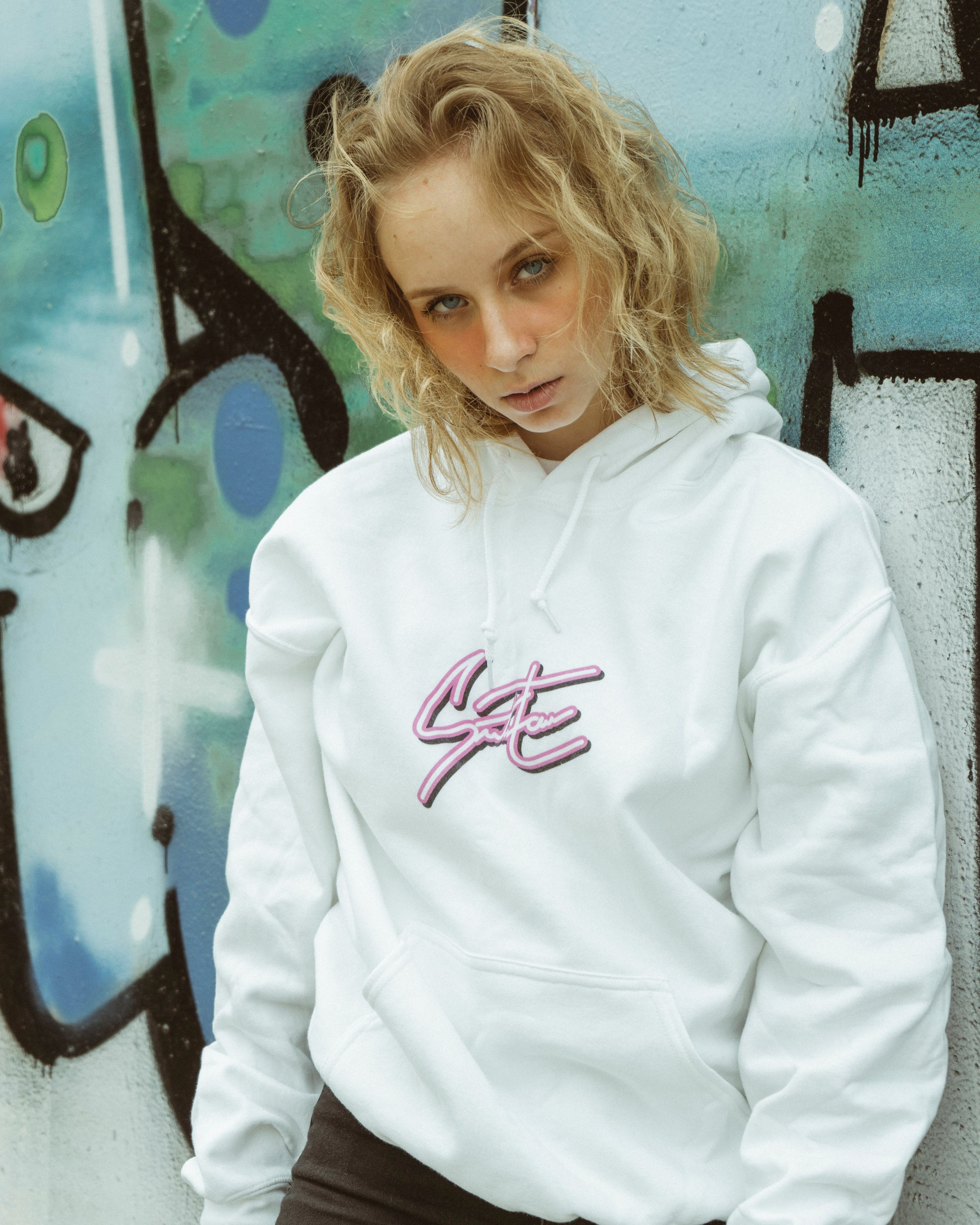
No amount of storytelling frees a brand from the arithmetic of retail: Denim Tears is positioned squarely in the upper-contemporary bracket. Working from 2026 market estimates, a denim tears hoodie typically falls between $250 and $400, jeans between $300 and $500, and tees between $100 and $200. Sweatpants tend to land around $250 to $350, with shorts nearer $180 to $280 depending on season and print coverage. Those ranges describe typical asking levels rather than a fixed price, and archive pieces or scarce colourways routinely trade well above them. Part of what buyers are paying for is scarcity, since drops have typically been limited runs rather than open stock. What is left is the thing that cannot be made cheaply, namely a design language that nobody else can borrow without instantly looking derivative.
The Case the Clothes Are Making
Strip away the resale charts and the collaboration list and one straightforward proposition is left. The label was built on the idea that clothing can hold historical memory without reducing it to a slogan, and he did it using the most commercially mainstream garments available. The wreath is not a logo in the usual sense, because logos exist to identify a seller and this one exists to point at something outside the transaction. That difference is why the brand has maintained its standing while many contemporaries have moved through relevance and gone. And it is why the motif deserves to be described accurately rather than reduced to a pattern, no matter whether the piece is a denim tear shirt, a pair of jeans or a hoodie. Searching denimtears in 2026 turns up thousands of listings, and behind each of them sits a single idea from 2019 that has declined to soften.